
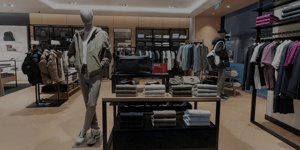
A field rep finishes a Tuesday afternoon visit at a mid-sized location and notices something worth knowing. A secondary display near the pharmacy entrance, one that nobody planned much around, is pulling steady engagement, more than the feature display at the front of the store. She photographs it, notes it in her visit report, and moves on to the next stop. The observation is accurate, useful, and specific. It is also, in all likelihood, the last anyone will ever think about it. The report gets filed. The photo lands in a folder. Three months later, the brand redesigns its display strategy without realizing that one of its best-performing placements was sitting near the pharmacy in a store nobody had flagged.
That is the quiet inefficiency running beneath many retail organizations. The information exists. Field teams, store associates, and merchandisers generate it every single day. What's missing is the path from observation to decision, the system that turns what one person saw on a Tuesday into something the whole organization can learn from. Store feedback is one of the most valuable assets a brand has, and one of the most consistently wasted.
Store feedback is retail's most underused asset
Walk the floor of any store and intelligence is being generated in real time. A merchandiser sees which displays consumers stop for and which they walk past. A store associate can explain why a promotion is confusing people at the register. A field rep recognizes the same execution problem cropping up across a dozen locations. A competitor rolls out a new display approach that is winning attention on the sales floor without anyone at headquarters noticing. None of this shows up in a sales report, and all of it matters.
Most brands collect some version of this. Field notes, store visit reports, audit results, photos, the occasional phone call. The trouble is rarely that the feedback doesn't exist. It is that the feedback stays scattered, parked in emails, spreadsheets, and individual reports, documented but disconnected from any future decision. Stores generate information. Organizations struggle to generate learning from it, and those are very different things.
It helps to think about store intelligence as moving through three stages. Most organizations start and stop at the first.
The first stage is collecting information. Field teams document store conditions, execution, inventory gaps, customer observations, and competitive activity. The focus is on capture, and capture by itself rarely changes an outcome. The second stage is identifying patterns. Instead of reading reports one at a time, the organization starts asking whether the same issue is showing up across regions, whether certain merchandising tactics consistently outperform others, whether store teams keep hitting the same obstacle. This is where isolated observations start becoming insight. The third stage is driving decisions. The strongest organizations use what they learn from stores to shape merchandising strategy, prioritize field support, allocate resources, and sharpen conversations with retail partners. At that point, store feedback has become retail intelligence.
The opportunity for most brands is not in collecting more feedback. They already have plenty. It is building a better way to turn the feedback they already gather into action. The hidden value in a store visit was never the report. It is the intelligence that can be drawn from it, and most organizations already own that raw material without using it.
Information is not the same as intelligence
A single store observation tells you what happened in one location at one moment. One store reports a display problem. Another flags difficulty setting up a promotion. A third points to a fixture that doesn't fit the product. Viewed on their own, these are three isolated incidents, each absorbed and forgotten in its own report. Viewed together, they may be one pattern that warrants real attention, and possibly a single root cause showing up in three disguises.
That difference is the whole game, and the deciding factor is rarely the volume of information collected. It is how that information gets organized, verified, and applied. Consider two ways of stating the same finding. The first: “several stores reported display challenges.” It names a problem but offers no sense of where to look or how widespread it is. The second: “a significant share of stores using one particular fixture configuration are seeing placement problems that cut promotional visibility.” The second version carries context, scale, and direction. It points to a root cause, suggests where to focus, and tells a team what to do next. The first is reporting. The second is intelligence, and the gap between them is structure.
Structure is what lets a brand compare one store to another, one region to the next, one program against the last. Without it, an organization ends up reacting to whichever issue happens to surface loudest, store by store, never quite seeing the shape of the thing across its network. With it, the same stream of observations becomes a way to understand execution at scale and learn from it over time. This is also where merchandising decisions stop running on headquarters assumptions and start running on verified store reality, which tends to look quite different once someone checks.
The cost of skipping this work is easy to underestimate because it never arrives as a single dramatic failure. Merchandising teams lean on assumptions about what execution looks like. Operational problems linger longer than they should. A clever store-level workaround that solved something gets discovered by one rep and never shared with anyone else. Opportunities to improve the customer experience remain invisible until they show up in the numbers. The deeper loss is the inability to learn systematically from an entire retail network. Some of that loss is quantifiable: research from IHL Group estimates that inventory distortion, the combination of out-of-stocks and overstocks, costs retailers an estimated $1.77 trillion a year, and a large share of it originates at the store level, where better visibility would catch it early. Without a feedback loop, there is no reliable learning. Without learning, improvement stays slow and reactive.
What high-performing merchandising teams capture
For years, store visibility meant compliance. Was the display set correctly? Was the promotion activated? Was the product available? Those questions still matter because execution is the foundation on which everything else sits. What the best merchandising teams have figured out is that compliance alone rarely explains performance. A store can pass every compliance check and still underperform. A display can be set exactly to spec and fail to draw a single second glance. A promotion can go live and generate almost no engagement. The answers usually live in the conditions surrounding execution, not in whether the box got checked.
So the strongest teams capture more than completion. They look at a handful of things that, together, explain why a program works in one place and stalls in another:
- Execution quality, including display placement and visibility, fixture condition, and whether the activation supports the experience it was designed to create rather than just technically existing
-
Product performance on the floor, including availability, presentation, stock gaps, and assortment issues, since even a great display converts nothing if the hero product is missing or buried
-
The store environment, including traffic flow, layout quirks, available space, and what competitors are doing nearby, all of which shape how the same program performs differently across locations
-
Observations from store teams, who field customer questions all day and often spot product knowledge gaps and operational obstacles long before they reach a report
-
Customer behavior itself, how people engage with displays and products, what catches attention and what gets walked past, since influencing that behavior is the entire point of merchandising
What separates these teams is not that they capture the most. It is that they capture what explains performance. Every store holds a near-endless supply of things to note. The discipline is in gathering the observations that genuinely inform a decision and leaving the noise behind. When a brand collects information designed to drive action, store visibility becomes less of a reporting chore. It becomes a working source of real-world store intelligence that improves merchandising over time. A simple test cuts through the noise: the observations worth capturing are the ones a sharp store manager would act on before the end of the shift.
Building a continuous feedback loop
Most retail organizations have some visibility into execution. They run audits, collect reports, gather photos, and periodically confirm whether programs went in as intended. The problem is that retail does not happen in snapshots. A display set perfectly on Monday can be pushed aside by Friday. Inventory that was full at the start of a promotion can be picked clean a week in. Staffing, competitive activity, store priorities, and floor layouts all shift over the life of a program. A single audit captures one moment honestly and explains very little about what came before it or after. Stacked up over time, those one-moment views leave blind spots wide enough to obscure the true state of execution across a network.
Retail simply moves faster than most reporting cycles. Products sell through, displays migrate, seasonal priorities turn over, new competitive activity appears, and what was accurate this morning may be wrong by tomorrow afternoon. When visibility depends on periodic reporting, decisions are made based on information that has already expired. Issues hide for weeks before anyone catches them. Opportunities pass because nothing surfaced them in time. The organization settles into a reactive rhythm, spending more energy chasing problems than preventing them. The brands that improve execution consistently treat visibility as something that supports ongoing learning rather than occasional measurement, which is a large part of what shifts when merchandising adapts to each store rather than treating every location as a copy of the plan.
A working feedback loop turns each store visit into a contribution to that learning rather than a standalone status update. In practice, it runs through a few connected steps: observing what is happening through field visits and direct visibility, verifying conditions with structured data and photo documentation, identifying patterns across locations and retailers, prioritizing the issues and openings that deserve attention, acting on what was learned, and measuring the result to see whether the action worked. Connected, those steps make every observation a chance to improve the next decision.
The reason this matters comes back to patterns. A single store report is useful. A collection of reports read together can change strategy. A merchandising problem in one location might be a one-off. The same problem across forty stores is a signal, and probably a fixable one. Teams that can see across their locations stop treating every issue as isolated and start spotting the recurring challenges and the repeatable wins. They learn which approaches travel well between store formats and which fall apart outside their original context. That is the difference between aligning store execution with what consumers experience and hoping the plan survives contact with the floor. It also shows up in the data: in Zipline's survey of retail leaders, only 36% said most of their store initiatives execute correctly and on time, which is a wide gap between what is planned at headquarters and what stands on the floor, and a strong argument for building a loop that catches the difference early.
The payoff compounds, and it sets up what comes next
There is a real edge in learning from stores faster than competitors do, and it builds steadily over time. Every verified visit, every standardized observation, every connected data point adds to a clearer picture of what works where. Merchandising decisions become sharper because they rest on current conditions rather than last quarter's averages. Field support flows to the locations that need it rather than spreading evenly and thinly. Retailer conversations improve because both sides are working from the same verified picture rather than trading assumptions. Frontline observation, in particular, is an underused engine here; Deloitte's human capital research suggests 84% of executives believe frontline employees provide valuable business insight, yet few organizations have a reliable way to capture and act on what those employees see first.
This is also where structured retail intelligence becomes the groundwork for the next phase of retail decision-making. Most organizations are aware that AI is reshaping how the industry plans and operates, and many are eager to apply it to merchandising and execution. The piece that often gets skipped is that AI is only as good as the information it is given. A model cannot find a pattern in observations no one captured, cannot verify execution that was never measured, and cannot make sense of notes that vary wildly from one rep to the next. Humans can work around inconsistent, scattered information. Software cannot. For any analytics or AI capability to produce something trustworthy, the underlying store data has to be consistent, standardized, timestamped, location-specific, searchable, and verifiable. That description sounds operational, and it is also the precise definition of AI-ready retail data.
The useful reframe is that the brands likely to gain the most from retail AI are not the ones that buy the newest tools first. They are the ones already building reliable, organized, store-level data today, well before any model enters the picture. Predictive merchandising signals, automated issue detection, smarter store prioritization, trend spotting across markets, all of it depends on having dependable information in hand now. The technology will get more sophisticated. The requirement underneath it stays refreshingly plain: good data, captured at the store level, structured well enough to learn from. The advantage is built before the AI ever arrives.
Stores are the smartest source a brand has
Store feedback has always carried value. What's changed is that leading brands are learning to turn it to their advantage instead of letting it sit in a folder. When store-level observations are captured consistently, verified against reality, organized, and connected to the people making decisions, they stop being feedback and start being intelligence, the kind that sharpens execution, strengthens merchandising, and lets a brand respond to shifting conditions before they cost anything.
The organizations that pull ahead over the next several years will not be the ones sitting on the most data. They will be the ones that got best at learning from what their stores were telling them all along and turning it into the next smart move. That is the work ThirdChannel does every day, pairing brand-matched field teams with real-time technology so brands selling through third-party retail can capture verified store conditions, see the patterns across their network, and turn store-level reality into decisions worth making. Schedule a demo to see what your stores have been trying to tell you.