
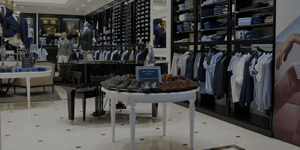
It is the first Saturday of a major seasonal promotion. Months of work lie behind it: creative development, retailer coordination, marketing campaigns, product allocations, and a display program rolling out across hundreds of stores. The plan calls for a featured presentation near the front of each location, supported by promotional signage and a carefully merchandised assortment designed to capture shopper attention.
In one of those stores, the display materials are still sitting in the stockroom. The promotional signage has not been installed. The featured products are available in inventory but have not yet made it to the sales floor. A customer who saw the campaign online walks into the store expecting to find the promotion, looks around, and leaves without ever seeing it.
The promotion is technically live. The campaign calendar says so. The products have shipped. The materials were delivered. As far as the headquarters knows, everything is on track.
This is the gap that quietly erodes the return on retail promotions. The problem is not planning. It is visibility. Brands invest significant resources into launches, seasonal programs, displays, and merchandising initiatives, then often treat delivery as the finish line. But delivery and execution are not the same thing. The distance between the two is where promotions underperform, opportunities are missed, and execution issues remain hidden until the most important selling days have already passed.
The brands pulling ahead have stopped asking whether a promotion shipped. They have started asking whether they can verify that shoppers are actually seeing it.
Why promotional execution breaks down between the warehouse and the sales floor
The strategy behind most promotions is sound. The trouble starts when a plan meets a real store, because execution gets more complicated than the rollout timeline ever suggested. A brand can spend months preparing a launch, lock in the timeline, produce the assets, allocate the inventory, and align with the retailer, only to watch the rollout vary from store to store once the boxes arrive.
Retail execution is often treated as a logistics problem. Once materials ship and stores confirm receipt, attention moves to the next initiative. But a store is not a static environment waiting to follow instructions. The associates on the floor are juggling customer questions, restocking, staffing gaps, resets, and a stack of competing brand and retailer priorities, all in the same shift. A well-planned promotion can be delayed, altered, or pushed down the list based on whatever else is happening that day.
Where execution breaks down
When a brand has no line of sight into the floor, the same failures show up again and again. Displays arrive on time and then sit in the stockroom waiting for someone with a free hour to build them. Signage goes up late, lands in the wrong spot, or never gets installed at all. Product reaches the store and stays in the back, counted as available in the system but absent from the floor where someone could buy it. Even the displays that do get built sometimes go up wrong, missing the featured items or the messaging that gave them a reason to exist.
Summer programs are especially exposed. A campaign timed to the opening weeks of the season has a narrow window to work in, and a delay of even a few days can cost a brand the exact traffic it planned around. The materials were technically delivered. The promotion technically launched. The sales it was built to capture still walked out the door.
The cost of not knowing
The bigger problem is that nobody knows these issues happened. When a brand assumes a promotion is live without confirming it, the problem usually surfaces only after the numbers come in soft, and by then the selling time is gone.
The damage rarely stays contained to one number. A promotion that underperforms drags down the marketing investment behind it. Execution that varies location to location produces a brand experience that changes by store, which chips away at the consistency a campaign was meant to build. Retail partners notice when a program lands unevenly, and the relationship absorbs some of the strain. Because the cause stays hidden, the correction tends to arrive late, often after the window that mattered has already passed.
The scale of that blind spot is well documented. Research surveying retail leaders found that only 36% say most of their store initiatives execute correctly and on time, which means a sizable majority know that at least one in four initiatives is failing somewhere they cannot see. The same research found 43% point to poor execution as a direct cause of lost sales. The promotion shipped. The register told a different story.
What leading brands verify
Inventory alone does not create sales. A product influences a customer only when it is visible, accessible, and presented as intended. So verification, done well, goes beyond whether merchandise arrived and into what customers experience on the floor.
That means confirming a handful of things reporting tends to take for granted:
-
Is the promotion live, with displays built and assets visible, rather than waiting in a box?
-
Is it in the right location, on the intended fixtures and where customers are most likely to engage with it?
-
Is the signage accurate and current, with correct pricing and approved creative?
-
Is the featured product on the floor, stocked, and ready to sell?
-
Is the presentation clean and easy to shop, rather than cluttered or half-maintained in a way that undercuts the whole effort?
Each of those checks answers a different failure mode, and a promotion can pass several while failing one.
A display can be live but in the wrong spot. It can be in the right spot under outdated signage. The signage can be flawless over an empty fixture. A display can also clear every line on that list and still fall short if it looks like nobody has touched it since open, because placement, upkeep, and basic shopability shape how customers respond as much as whether the display exists. Treating verification as a single yes-or-no misses how many distinct ways a promotion can come apart between the plan and the purchase.
Validating execution across the whole footprint
Confirming all of that across a national footprint takes more than a manager's summary at the end of the week. Leading brands gather direct evidence in a consistent, repeatable way. Structured store visits apply the same criteria to every location, so the results are comparable rather than anecdotal. Photo validation replaces description with proof, showing placement, signage, and condition firsthand. Mobile capture lets field teams record what they find in the moment, while a promotion is still running and there is still time to fix it. Promotion-specific checks keep the effort focused on what matters for a given launch, rather than drifting into a generic compliance sweep.
The shift underneath all of this is a move away from sampling. Checking a handful of stores and extrapolating across the network assumes a consistency that retail rarely delivers, and what happens in one location says little about the next. Broader visibility across the footprint changes the question from whether a promotion launched to how consistently it launched, where the gaps are, and what will help most.
Turning verification into action
Verification earns its keep only when it leads to something. Plenty of organizations collect store-level information and then file it. The advantage comes from using what you see to change the outcome while the promotion is still live, which real-time visibility makes possible by turning merchandising into strategy rather than a report read after the campaign ends.
The first payoff is catching problems early. Without visibility, an execution failure usually remains hidden until sales reveals that something went wrong, by which point the window to influence it has passed. With it, a missing display, a misplaced asset, an out-of-stock on the featured product, or a signage error surfaces while there is still time to correct it. Finding that on day one, rather than in the post-campaign review, is the difference between a fix and a write-off. The strongest programs treat this as ongoing rather than a one-time pass, so each cycle teaches the organization what works and where support pays off, and execution improves from one campaign to the next rather than resetting each time.
Sending field teams where they matter most
Not every store needs the same attention, and sending teams everywhere is rarely practical. Acting on assumptions tends to push effort toward the wrong places. When a brand can see which locations have real gaps, it can direct support to the stores that need it and leave the ones already running well alone.
The people on the floor matter here as much as the data. A feed of store conditions can tell a brand that a display is missing facings. It takes a person standing in the aisle to see that the replacement stock is in the back room, that the floor associate never heard the reset changed, and that a competitor has slid into the better placement. In a third-party retail environment, the field team is the bridge between what the brand sees and what changes on the floor. A Brand Ambassador rebuilds the display, fixes the signage, and has the conversation with the store manager that turns an alert into a corrected aisle. Seeing the problem and resolving it closes the loop together: observe, validate, correct, and verify again.
The cost of skipping that loop is real. Stockouts alone are estimated to cost retailers close to $1 trillion globally each year, and a meaningful share of these costs trace back to product that was in the building but never reached the floor during a promotion. Part of the fix is structural. Research surveying store leaders found that 70% say they lack a clear way to share feedback with corporate, which means the people most likely to spot an execution gap often have no reliable channel to flag it. A working verification process gives them one, so the floor and headquarters finally see the same store.
From proof to intelligence: the data verification leaves behind
Most brands treat verification as a pass-or-fail check. Was the display up? Was the signage right? Was the product available? Those questions matter, but a checked box describes a single moment in a single store.
A single visit confirms whether one promotion is live. Thousands of them, captured consistently, reveal how execution behaves across retailers, regions, store formats, and campaign types.
Every verification creates structured information: promotion status by location, product availability at the point of sale, placement quality, the conditions affecting execution, when a launch completed, and how all of it differs by retailer and region.
Collected over time, that becomes one of the more useful datasets a brand can own, because it describes the exact place customers make decisions. It starts to show which retailers execute most consistently, which stores repeatedly need help, which kinds of promotions activate easily, and which launch windows create the most friction. Verification stops being proof and becomes a learning system, the kind of relevance that increasingly separates strong merchandising programs from busy ones.
Why AI depends on structured execution data
The current excitement around AI meets a hard requirement here. AI is genuinely good at finding patterns across large datasets that no person could review store by store. It can surface recurring execution issues, flag locations that consistently struggle with launches, and spot early risk signals before they spread.
An academic study found that something as ordinary as consistent inventory audits produced an 11% store-wide sales lift, which reframes verification as a revenue driver rather than a compliance cost. The same research, covering roughly 24,000 products across 11 stores, found that inventory accuracy is heavily influenced by store conditions, replenishment frequency, and promotional activity, a strong argument for continuous verification rather than a one-time check.
The catch is that AI is only as good as the data it's trained on. Most retail organizations are not short on information. They have photos, emails, spreadsheets, audit reports, and field notes scattered across disconnected systems and inconsistent formats, with the useful insight trapped inside. For AI to do anything meaningful with it, execution data has to be consistent, standardized, timestamped, location-specific, searchable, and backed by documented evidence.
Verification, captured well, produces exactly that, which is why it is the foundation rather than the afterthought of any serious retail intelligence effort. Industry coverage of NRF 2026 pointed to a shift toward practical retail AI built on real-time operational data and inventory visibility, the kind of foundation that exists only when execution is verified rather than assumed. The brands positioned to benefit are those whose data reflect what is happening in stores.
Proof is becoming the standard
Shipping a display, delivering signage, and sending product into stores is the beginning of execution, not the proof of it. What proves the return on promo execution is whether customers encounter the promotion as designed, on the day it was meant to be there. The brands that lead are building that confirmation into how they operate, so a launch gets judged by what reaches the floor rather than what left the warehouse.
The payoff compounds. Verification gives teams the confidence to act faster and the consistency to execute consistently across hundreds of locations. The data it generates turns into a clearer picture of how retail programs really perform, and that picture sharpens every plan that follows. As AI takes on a larger role in retail decisions, the advantage will go to brands whose execution data is verified and structured enough for the technology to learn from.
That is the work ThirdChannel does every day, pairing brand-matched Brand Reps with real-time technology so brands selling through third-party retail can confirm what is live, fix what is not, and keep a record of what happens in their stores. An unverified promotion is only an assumption about what customers saw. Schedule a demo to see what it looks like to replace that assumption with proof.